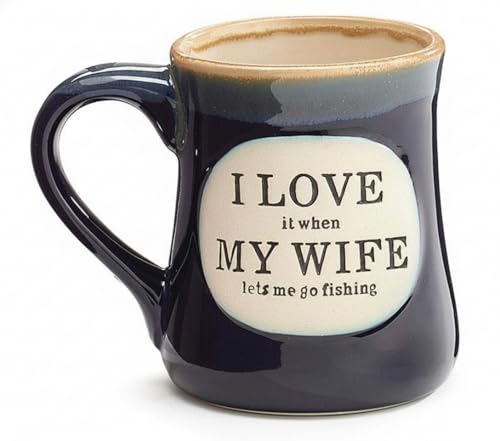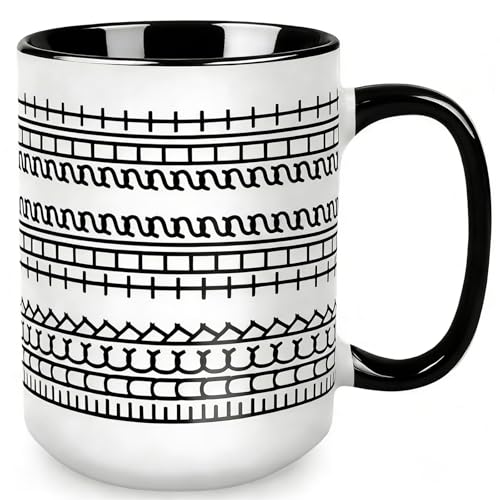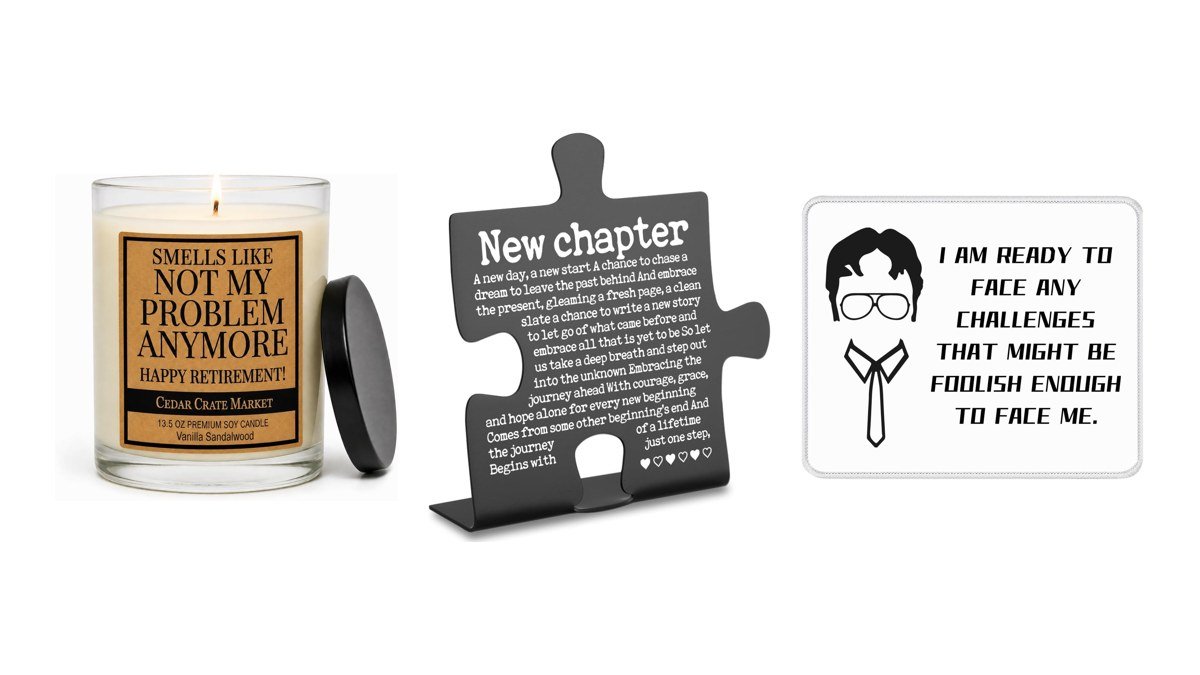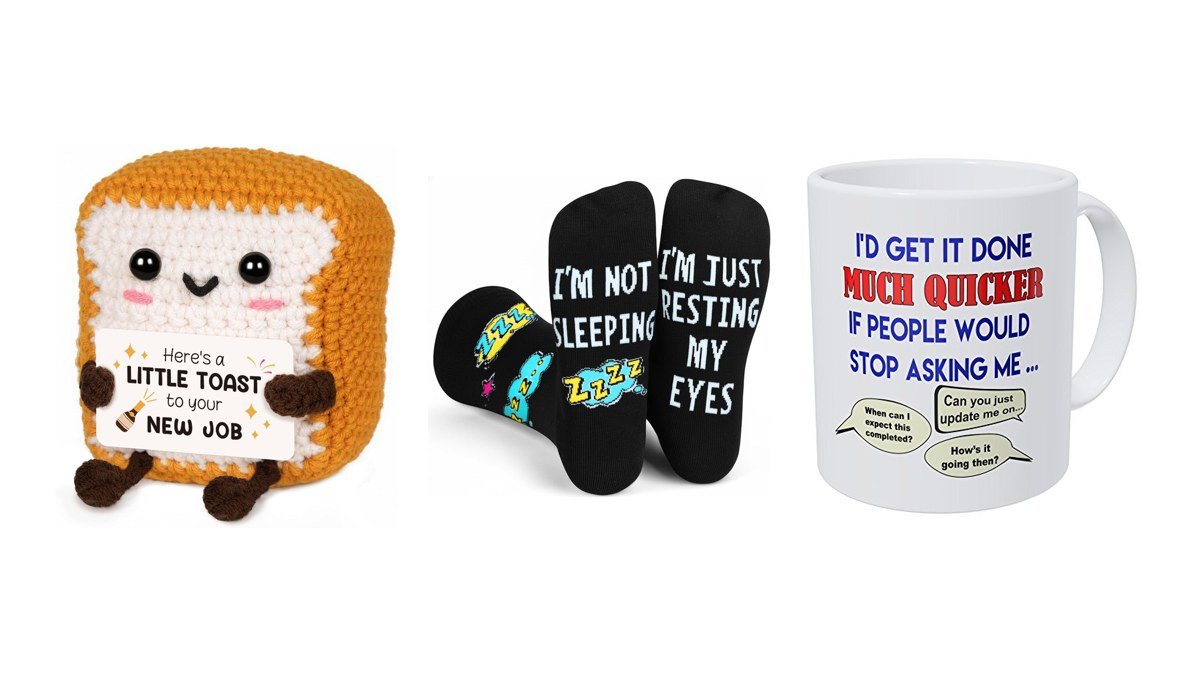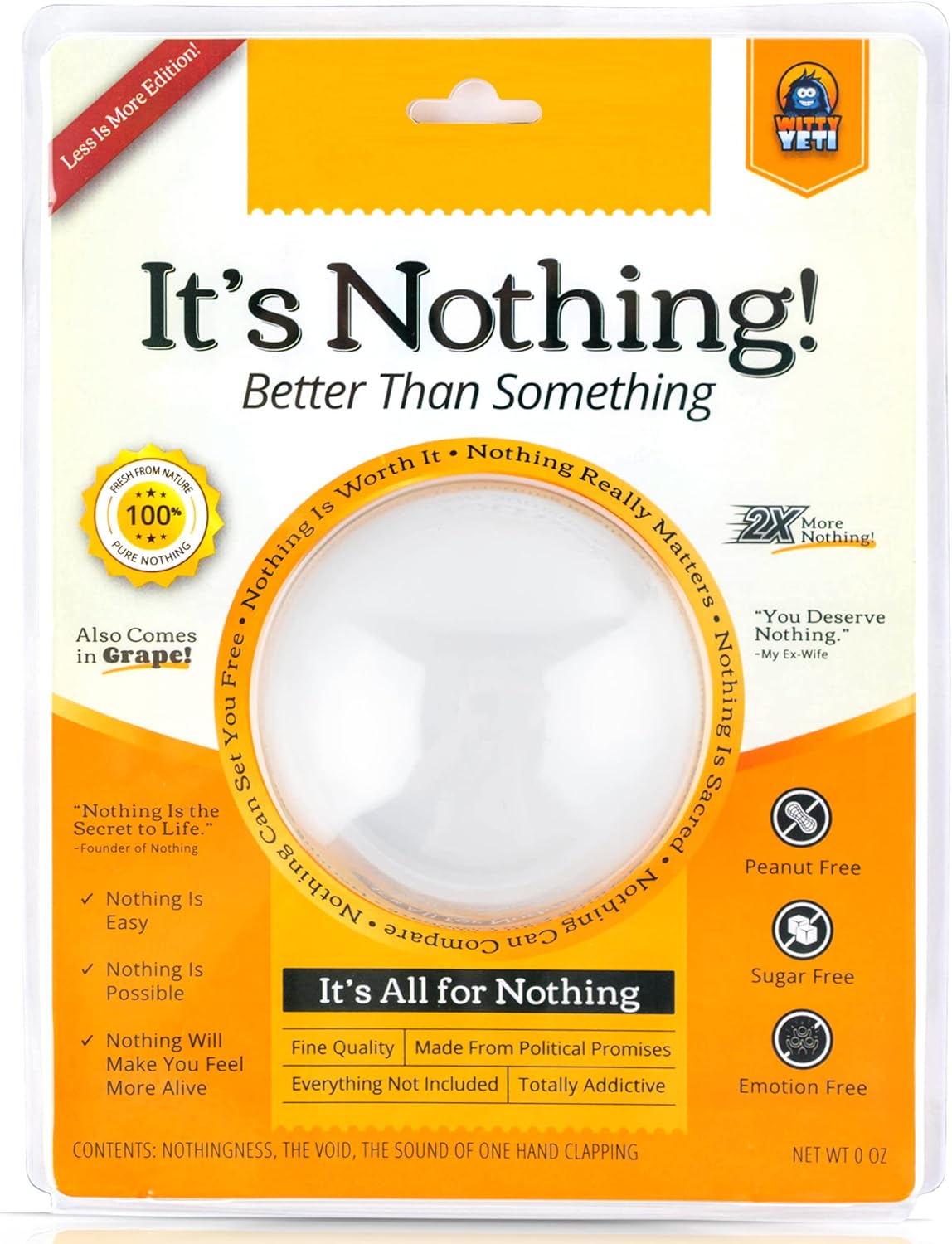
You have twelve dollars, a name pulled from a hat, and about nine minutes of decision-making energy left in the tank. So you land where everyone lands: the novelty mug vs funny t-shirt gift standoff. Both are cheap. Both are technically a joke. Both are sitting in a search results page in front of you right now, wearing the same smug expression. The question nobody asks is which one actually gets used after the wrapping paper hits the floor, and that turns out to be a very different question from which one gets the bigger laugh in the room.
Let’s settle it properly. Cost, sizing risk, shelf life, and the grim statistical likelihood of ending up folded in a donation bag by March.
The sizing problem nobody wants to talk about
A mug has one size. That is its entire competitive advantage and it is enormous. You do not need to know anything about the recipient’s body, their preferred fit, whether they have opinions about sleeve length, or whether they are currently in a phase of their life they would rather not have documented by a piece of clothing that no longer fits.
A t-shirt requires you to make a guess about someone’s torso in public. Get it too small and you have accidentally sent a message. Get it too large and you have sent a different, slightly kinder, but still audible message. Neither of those was the joke you were going for. And unlike a mug, the recipient cannot pretend the sizing was fine. They have to try it on, in front of you, at a party, while everyone watches.
There are workarounds. Order up. Ask a mutual friend. Pick a style that is deliberately oversized so the fit reads as intentional. But every workaround is extra effort, and the whole appeal of a gag gift is that it costs you almost none.
- Mug sizing risk: zero.
- T-shirt sizing risk: moderate to high, rising sharply with how little you know the person.
- Hidden third option: socks, which fit almost everybody and are surprisingly hard to insult someone with.
If the sizing anxiety is what is stopping you, the wider world of funny clothing gifts that solve the fit problem is worth a look before you commit to guessing a stranger’s chest measurement.
Cost per laugh, and cost per use
Roughly speaking, these two categories sit in the same price bracket, which is exactly why they end up competing. Neither one is going to bankrupt you. What differs is what you get for the money.
A mug delivers a small, repeated laugh. Every morning, for as long as the mug survives. It is a low-amplitude joke with an extremely long tail. Nobody photographs a mug. Nobody texts a friend about a mug. But the joke gets read maybe four hundred times a year by someone who is not fully awake and therefore weirdly susceptible to it.
A t-shirt delivers one large laugh at the moment of unwrapping, and then a series of increasingly optional laughs depending on whether the recipient is the kind of person who wears jokes in public. Some people are. Most people are the kind of person who wears jokes to bed.
If you want the maximum reaction in the room, the shirt wins. If you want the gift to still be functioning in eighteen months, the mug wins by a distance. The rest of the field of funny gifts under twenty-five dollars that don’t look cheap sits in between these two poles, and quite a lot of it beats both on the cost-per-use metric.
Shelf life: how long before the joke expires
Jokes decay. This is the part of gag gifting that people underestimate.
A mug joke decays slowly because the audience is one person, in a kitchen, alone. It does not need to stay funny. It just needs to stay tolerable. A mug that says something mildly rude about mornings will still be in rotation years later, not because it is hilarious, but because it holds coffee and has stopped being noticed.
A t-shirt joke decays fast because the audience is everyone the recipient meets. A reference that was current in January is a small archaeology exhibit by September. Anything topical, anything tied to a specific meme or news cycle, has a half-life measured in weeks. The shirt does not stop existing. It just quietly relocates to the drawer for painting clothes.
The exception is the evergreen shirt. Jokes about being tired, disliking mornings, loving a specific pet, or having a hobby that has consumed one’s personality do not expire, because the underlying condition does not expire either. If you are buying a shirt, buy a permanent joke.
Which one actually gets used, honestly
Here is the uncomfortable answer: the mug gets used more, and the shirt gets loved more.
Mugs enter a rotation. They are functional objects with a joke printed on them, and the function carries the joke past the point where the joke would have died on its own. This is why the average kitchen cupboard contains three mugs somebody found funny in 2016 and one everybody actually reaches for.
Shirts enter a wardrobe, which is a much more competitive environment governed by fit, comfort, laundry timing, and whether the person wants to explain a joke to a colleague. The shirt is only worn when the joke, the fit, and the social context all line up. That is three conditions, and gifts that require three conditions do not get used much.
The flip side: people remember shirts. Ask someone about a funny gift they were given and they will describe a shirt long before they describe drinkware. The shirt is a story. The mug is furniture.
The donation bin test
Apply this before you buy anything. Imagine the recipient doing a clear-out in eight months. Which item survives?
- Mug: survives, because throwing away functional drinkware feels wasteful in a way that throwing away a t-shirt does not. Mugs get demoted to the pens-and-scissors role, or the greenhouse, or the office. They are extremely hard to kill.
- T-shirt: vulnerable. Clothing clear-outs are ruthless and joke shirts are the first casualties, right after anything with a stain.
This is not a reason to never buy a shirt. It is a reason to be honest about what you are buying: a moment, not an artifact. If you want an artifact, buy something that lives on a shelf. The catalogue of weird home decor nobody needs but everyone wants is full of objects that survive every clear-out purely because they have become part of the room.
Who each one actually suits
Buy the mug when:
- You barely know the person. Office swap, secret santa, new in-law.
- The recipient has an established beverage identity. Coffee people, tea people, people with a machine that cost more than their sofa.
- The joke is about their job, their sleep schedule, or their tolerance for other humans.
- You want the gift to be used rather than admired.
Buy the shirt when:
- You know their size, or you know they favour oversized fits anyway.
- The joke is specific to them in a way that a mug could not carry. An inside reference. A hobby taken too far.
- The occasion needs a visible reaction. Birthdays, stag and hen events, anything with an audience and a phone.
- They are the kind of person who genuinely wears this stuff, which you will know because you have already seen them do it.
For the coffee-forward recipient specifically, there is a step up from generic mug territory into gear that gets a real reaction. The rundown of weird gifts for coffee lovers who think they have seen everything covers what to buy when the person already owns fourteen mugs and needs none of them.
The third option you keep ignoring
The reason this debate exists is that both items are frictionless to buy. That is a convenience argument, not a gift argument. And there is a whole tier of similarly cheap items that outperform both on use and reaction: novelty kitchen tools, absurd desk objects, small games, unlikely food, anything with a mechanism.
These win because they do something. A gag gift that performs an action gets picked up repeatedly, which is the mug’s advantage, while also being surprising, which is the shirt’s advantage. If you are shopping for an occasion where the gift needs to work in a room full of people, funny gift ideas built for game night will do more work than either of the defaults.
What to actually buy
Buy the mug. Not because it is the funnier gift, but because it is the one that survives contact with real life. It fits everyone, it never needs explaining to a colleague, it cannot embarrass its owner in a supermarket, and it keeps quietly delivering its small joke every morning for years. For low-information gifting – the office swap, the person you have met three times – it is close to unbeatable.
Buy the shirt only when you have information. A size you are confident in, a joke that is permanent rather than topical, and a recipient you have personally witnessed wearing something similar. Meet all three conditions and the shirt outperforms the mug enormously, because it becomes the gift people bring up years later. Miss any one of them and you have bought an expensive dust cloth.
And if you can spare five more minutes than a default requires, skip both and buy the object that does something. That is the version of this gift the recipient will actually pick up twice.